
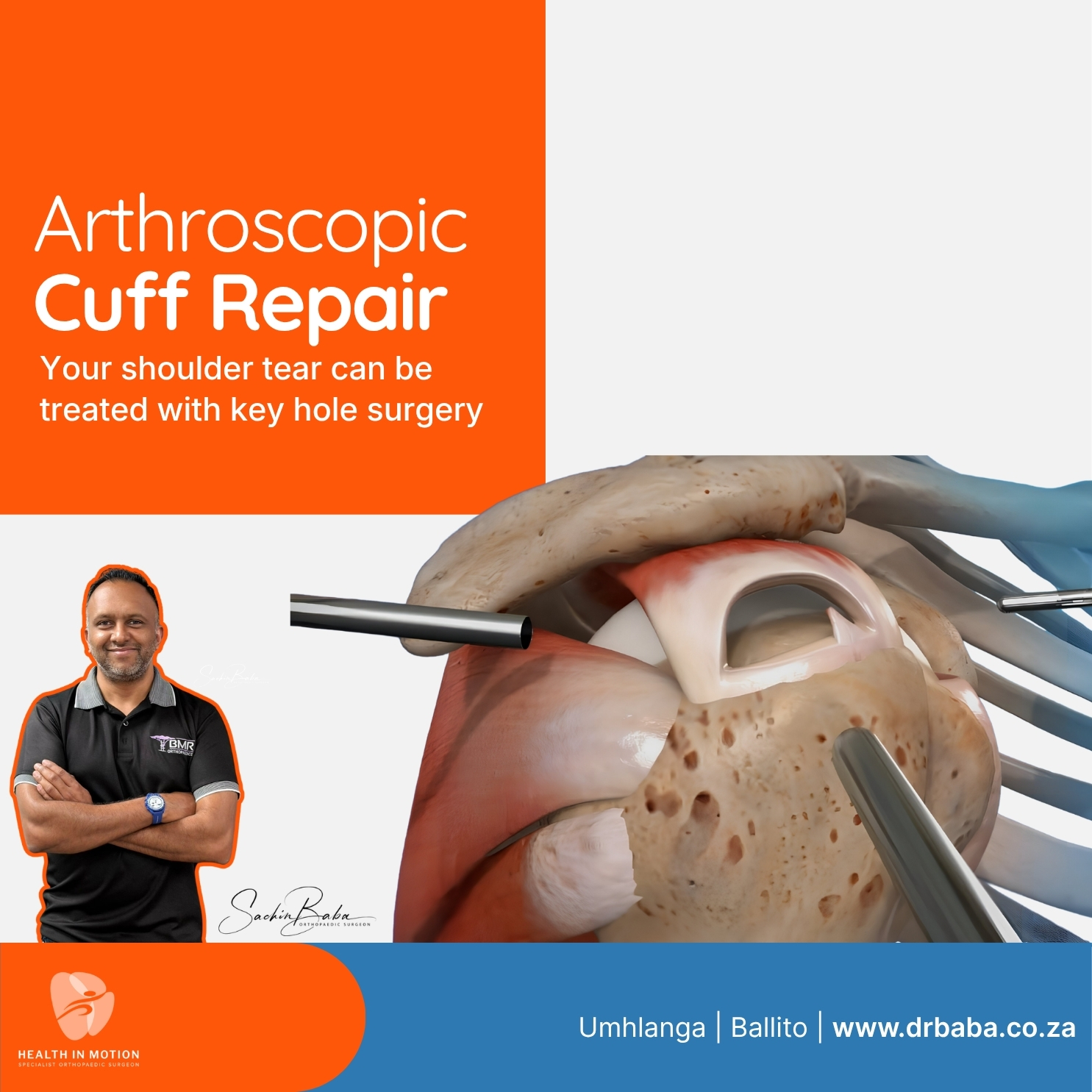
The rotator cuff is a group of four muscles and tendons that stabilise the shoulder joint and allow overhead movement. When one or more of these tendons tear — whether from an injury or gradual wear — the result is pain, weakness, and loss of function that can significantly affect daily life.
Arthroscopic rotator cuff repair allows us to address these tears through small keyhole incisions, typically around 5mm each, using a camera and specialised instruments. It’s precise work, and every tear is different — but here’s a general overview of what the procedure involves:
• Diagnostic arthroscopy: We insert the camera into the joint first to assess the full extent of the tear and check for any associated pathology.
• Subacromial decompression: If there’s impingement from a bony spur, we shave this down to create more space for the repaired tendon.
• Tissue preparation: The torn tendon edges and the bone footprint are freshened up to encourage healing.
• Anchor placement — Small suture anchors are inserted into the bone, and the sutures are passed through the tendon to reattach it securely.
• Final inspection: We confirm the repair is stable and the tendon sits where it should.
The advantage of doing this arthroscopically is less soft tissue disruption, which generally translates to less pain and a more manageable rehabilitation. That said, recovery still requires patience — a structured physiotherapy programme over several months is essential for a good outcome.
If you’ve been told you have a rotator cuff tear, or if persistent shoulder pain is limiting what you can do, it’s worth getting a proper assessment. The sooner we understand what’s going on, the more options we have.